CA Lic #947534 (C-39)ActiveGAF Master Commercial • BBB Accredited100% In-House Crews
24/7 High-Desert & SoCal Dispatch: (661) 498-7663
APR Roofing Solutions Logo
APR ROOFINGSOLUTIONS • CSLB #947534
CSLB #947534 Certified Authority Engine

Southern California Roofing Knowledge Base & Technical Guides

Genuine, engineer-grade roofing guidance for Antelope Valley, Santa Clarita, South Bay, and San Gabriel foothill property owners. Uncompromising technical accuracy, California Title 24 compliance, and transparent cost insights.

Showing 42 authoritative roofing guides
Why Is My Roof Leaking During Rain? Step-by-Step Diagnostic Guide
Emergency Repair
7 min read

Why Is My Roof Leaking During Rain? Step-by-Step Diagnostic Guide

A roof leak during rain occurs when water breaches the primary roof covering (shingles or tiles) and penetrates degraded underlayment or compromised flashing. Water rarely travels straight down; it frequently enters at an uphill roof penetration, flows along rafter slopes or ceiling joists, and drips through sheetrock several feet away from the exterior breach.

By Mike & AndreRead Guide
Emergency Roof Leak Repair in Lancaster, CA — Rapid Desert Response
Emergency Repair
6 min read

Emergency Roof Leak Repair in Lancaster, CA — Rapid Desert Response

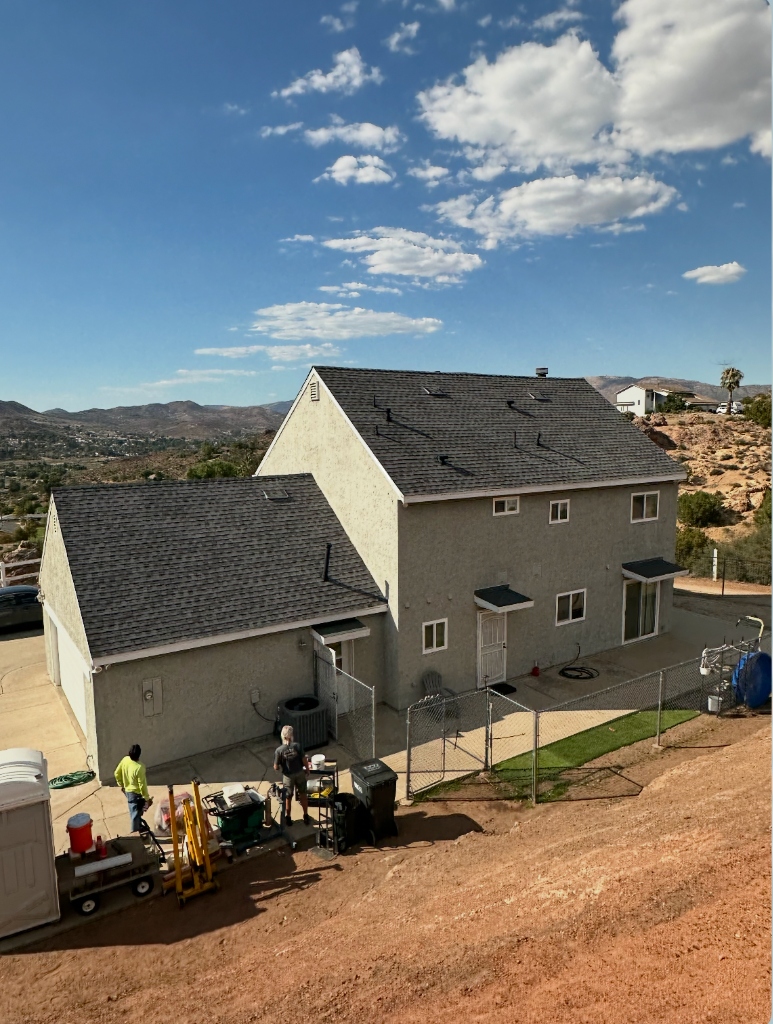
Emergency roof repair in Lancaster addresses urgent storm damage, wind shingle blow-offs, and sudden ceiling water ingress. Lancaster experiences extreme wind shear through Soledad Canyon and the Antelope Valley desert floor, where gusts routinely exceed 50-65 MPH. APR Roofing deploys dedicated emergency crews equipped with reinforced poly-tarps, sandbags, and 6-nail high-wind fastening systems.

By Mike & AndreRead Guide
Wind Damage Roof Repair in Palmdale, CA — Shingle & Tile Restoration
Emergency Repair
6 min read

Wind Damage Roof Repair in Palmdale, CA — Shingle & Tile Restoration

Wind damage on Palmdale roofs results from high-velocity desert wind events funneling through Ritter Ridge and the San Gabriel foothills. Wind causes aerodynamic uplift that breaks shingle seal strips, tears off ridge caps, and rattles concrete tiles. APR Roofing provides complete wind restoration, including shingle tab replacement, re-nailing with 6-nail patterns, and tile re-anchoring.

By Mike & AndreRead Guide
What to Do When Roof Shingles Blow Off: Step-by-Step Homeowner Action Plan
Emergency Repair
6 min read

What to Do When Roof Shingles Blow Off: Step-by-Step Homeowner Action Plan

When roof shingles blow off, immediately inspect your lawn and roof from the ground to assess the scope of missing material. Check your attic or upper-floor ceilings for active moisture intrusion, take timestamped photos of the damaged roof and fallen shingles for insurance purposes, and schedule a licensed C-39 roofing contractor to install a temporary weather barrier before rain enters the exposed underlayment.

By Mike & AndreRead Guide
Why Is Water Leaking Around My Chimney? Flashing & Cricket Solutions
Emergency Repair
7 min read

Why Is Water Leaking Around My Chimney? Flashing & Cricket Solutions

Water leaks around chimneys are almost always caused by failed step flashing, rusted base metal, cracked counterflashing sealant, or the absence of a roof cricket (saddle). Chimneys penetrate both the roof framing and the exterior weather barrier. Because masonry and wood frame expand and contract at different rates, rigid caulk seals crack over time, letting runoff channel straight into interior walls.

By Mike & AndreRead Guide
Roof Leak Around an HVAC Unit: Commercial & Residential Solutions
Commercial Roofing
7 min read

Roof Leak Around an HVAC Unit: Commercial & Residential Solutions

A roof leak around an HVAC unit typically originates from failed curb flashing, degraded pitch pocket sealant, cracked vibration isolator gaskets, or disconnected condensate drain lines. Rooftop heating and air conditioning units generate continuous mechanical vibration and thermal expansion, which loosens fastener penetrations and splits roofing membranes around the curb perimeter.

By Mike & AndreRead Guide
How to Recognize Roof Storm Damage: Post-Storm Inspection Checklist
Emergency Repair
6 min read

How to Recognize Roof Storm Damage: Post-Storm Inspection Checklist

To recognize roof storm damage, look for missing shingle tabs, horizontal crease lines across shingle faces, dented soft-metal roof vents or gutters, bruised granules from hail or debris impact, cracked concrete tiles, and water marks inside your attic. High winds create localized low-pressure zones that lift shingle tabs, breaking the manufacturer asphalt seal without necessarily blowing shingles off the roof.

By Mike & AndreRead Guide
Emergency Roof Tarping Explained: Professional Protection Standards
Emergency Repair
6 min read

Emergency Roof Tarping Explained: Professional Protection Standards

Emergency roof tarping is a temporary weatherproofing procedure designed to seal storm-damaged roof sections until permanent repairs can occur. Proper tarping requires heavy-duty 10-mil woven poly tarps anchored with 2x4 wood battens rolled into the tarp edges. The tarp must extend past the roof ridge peak to prevent water from running underneath the top edge.

By Mike & AndreRead Guide
Why Roof Leaks Return After Repairs: The Pitfalls of Surface Patches
Emergency Repair
7 min read

Why Roof Leaks Return After Repairs: The Pitfalls of Surface Patches

Roof leaks return after repairs when contractors perform superficial surface patches instead of fixing the underlying underlayment and flashing. Spreading roof tar, mastic, or silicone over shingles or tiles only blocks water at the surface; it traps moisture underneath, accelerates wood rot, and fails to address the uphill entry point where water originally penetrated the waterproof barrier.

By Mike & AndreRead Guide
Roof Flashing Leak Warning Signs: Step, Valley & Drip Edge Guide
Emergency Repair
7 min read

Roof Flashing Leak Warning Signs: Step, Valley & Drip Edge Guide

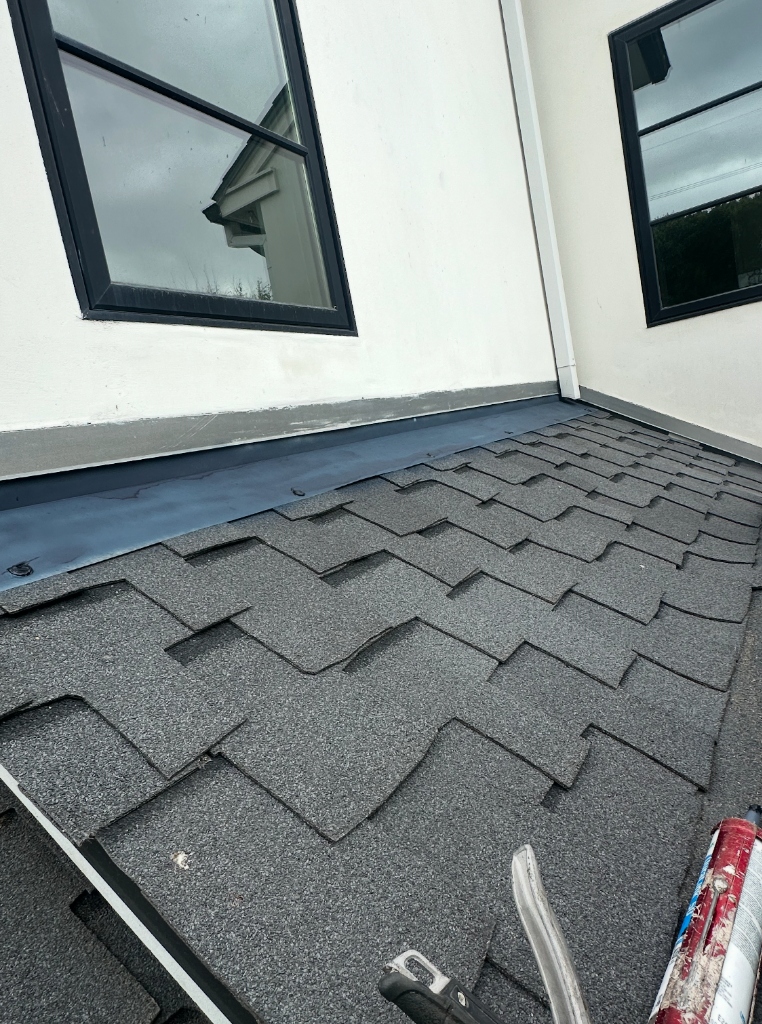
Roof flashing leak warning signs include peeling paint along exterior fascia, water stains on ceilings near exterior walls, rust streaks running down valleys, missing counterflashing sealant, and spongy drywall adjacent to fireplaces or wall intersections. Flashing is the thin sheet metal installed at roof transitions; when it corrodes or separates, water bypasses shingles and enters framing directly.

By Mike & AndreRead Guide
How Long Does a Roof Last in Desert Heat? Antelope Valley Lifespan Guide
Residential Roofing
7 min read

How Long Does a Roof Last in Desert Heat? Antelope Valley Lifespan Guide

In high-desert climates like Lancaster and Palmdale, standard asphalt shingles last 15 to 20 years (compared to 25 to 30 years in temperate coastal zones). Tile roofs themselves can last 40 to 50+ years, but the asphalt underlayment beneath them degrades within 18 to 22 years due to extreme attic thermal baking. Commercial TPO single-ply membranes typically last 18 to 22 years under desert UV exposure.

By Mike & AndreRead Guide
Tile Roof Repair vs Replacement: Spanish & Concrete Tile Guide
Residential Roofing
8 min read

Tile Roof Repair vs Replacement: Spanish & Concrete Tile Guide

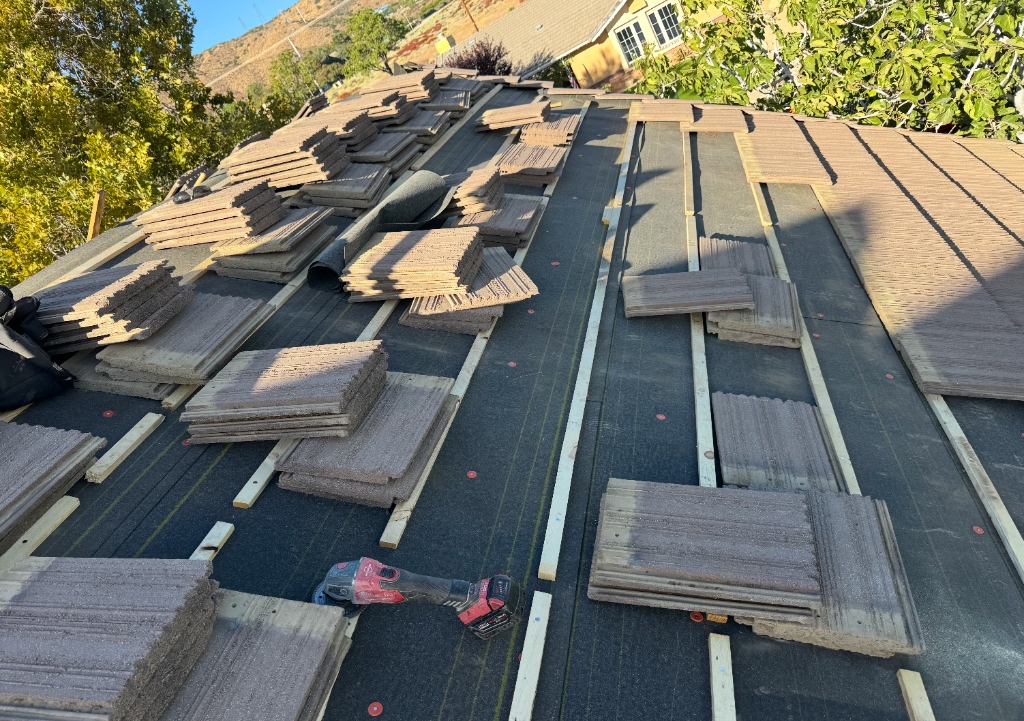
The decision between tile roof repair and replacement depends on the condition of the underlying waterproofing underlayment. Because clay and concrete tiles can last 50+ years while underlayment lasts 20 to 25 years, homeowners rarely need to buy new tiles. Instead, a 'Tile Lift and Reset' preserves your existing tiles, replaces the degraded underlayment and rotten battens, and saves up to 40-50% compared to purchasing new tile.

By Mike & AndreRead Guide
Why Roof Underlayment Fails: Felt vs Synthetic vs SBS Membranes
Residential Roofing
7 min read

Why Roof Underlayment Fails: Felt vs Synthetic vs SBS Membranes

Roof underlayment fails when extreme attic heat and UV exposure volatilize the asphalt oils inside the sheet, leaving behind dry, brittle fibers that crack under mechanical stress. Standard organic #30 felt paper degrades within 15 to 20 years in Southern California heat. Once brittle, foot traffic, wind uplift, and water expansion create tears that channel water directly into the roof decking.

By Mike & AndreRead Guide
Best Roofing Materials for High Winds: ASTM D3161 & D7158 Guide
Residential Roofing
7 min read

Best Roofing Materials for High Winds: ASTM D3161 & D7158 Guide

The best roofing materials for high winds are architectural asphalt shingles rated ASTM D7158 Class H (engineered to resist 130 MPH winds) and mechanical interlock standing seam metal roofs. In desert regions like Lancaster and Palmdale, wind resistance depends equally on installation specifications: a 6-nail fastening pattern, enhanced starter strip shingles along eaves and rakes, and high-wind ridge cap assemblies.

By Mike & AndreRead Guide
Concrete Tile Roof Repair Guide: Battens, Valleys & Broken Tiles
Residential Roofing
7 min read

Concrete Tile Roof Repair Guide: Battens, Valleys & Broken Tiles

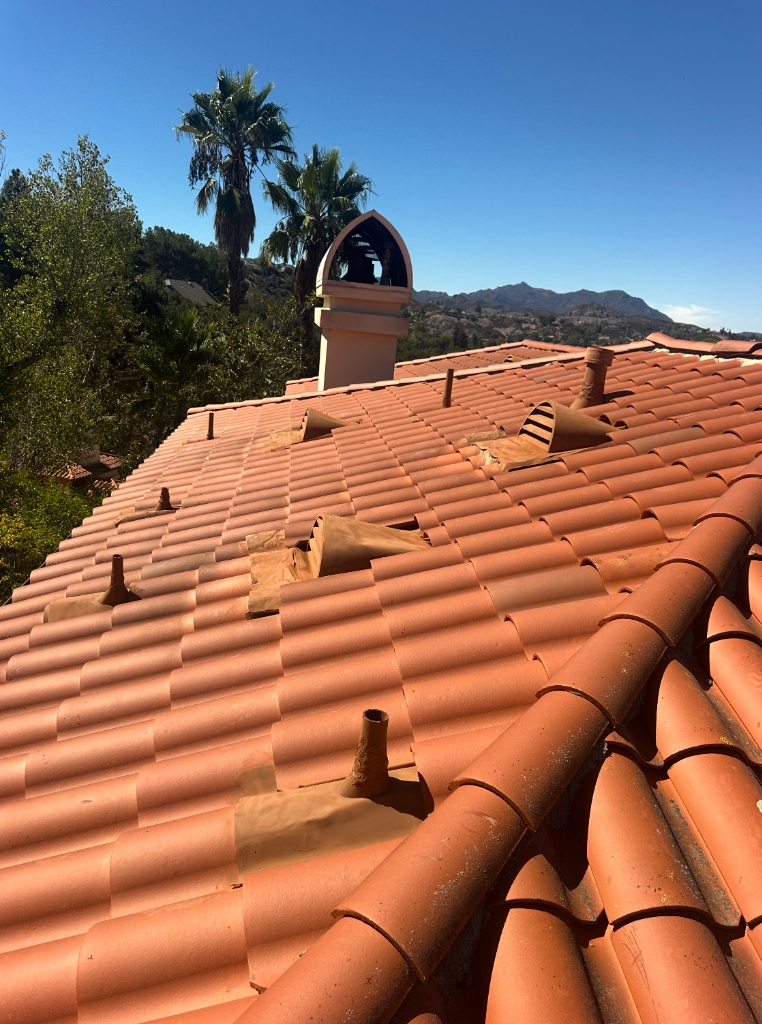
Concrete tile roof repair addresses cracked or displaced flat/barrel tiles, rotted wooden battens, clogged valley metal, and deteriorated underlayment. While concrete tiles withstand high winds and hail, debris dams in valleys and broken mortar bird-stops allow water to bypass tiles and pool on the underlayment. Professional repair involves replacing broken tiles with matching profiles and restoring the waterproof membrane underneath.

By Mike & AndreRead Guide
Commercial TPO Roofing in Southern California: Single-Ply Authority Guide
Commercial Roofing
9 min read

Commercial TPO Roofing in Southern California: Single-Ply Authority Guide

Commercial TPO (Thermoplastic Polyolefin) is the leading single-ply flat and low-slope roofing membrane in Southern California. Composed of ethylene propylene rubber polymerized with polypropylene, TPO features heat-welded seams that are 3 to 4 times stronger than glued rubber seams. TPO reflects up to 86% of solar radiation, meeting strict California Title 24 cool roof standards while providing 20 to 25+ years of watertight protection.

By Mike & AndreRead Guide
How Long Does a TPO Roof Last? Commercial Lifespan & Longevity Factors
Commercial Roofing
7 min read

How Long Does a TPO Roof Last? Commercial Lifespan & Longevity Factors

A properly installed commercial TPO roof lasts 20 to 25 years on average, with heavy-duty 60-mil and 80-mil systems reaching 30 years under regular maintenance. TPO longevity depends primarily on membrane thickness, quality of robotic hot-air seam welding, drainage slope to prevent 48-hour ponding water, and frequency of commercial foot traffic.

By Mike & AndreRead Guide
TPO vs EPDM Roofing in California: White Reflective vs Black Rubber
Commercial Roofing
8 min read

TPO vs EPDM Roofing in California: White Reflective vs Black Rubber

In California, TPO overwhelmingly outperforms EPDM due to its white reflective surface and heat-welded seams. While black EPDM rubber is popular in cold northern states for solar heat absorption, in sunny California it reaches surface temperatures of 170°F+, drastically increasing HVAC cooling loads. TPO reflects up to 86% of solar heat, complies with California Title 24 cool roof codes, and features heat-fused seams that resist standing water.

By Mike & AndreRead Guide
Commercial Flat Roof Leak Causes: Ponding, Seams & Penetrations
Commercial Roofing
8 min read

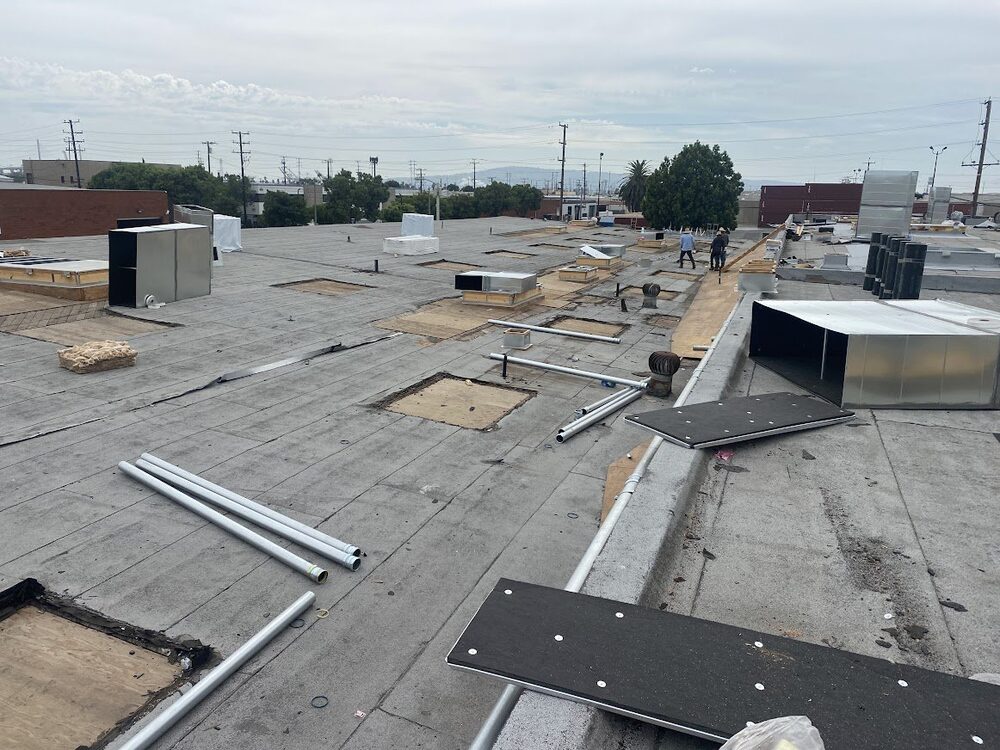
Commercial Flat Roof Leak Causes: Ponding, Seams & Penetrations

Commercial flat roof leaks are primarily caused by four vulnerabilities: 1) Failed seam welds or lap joints, 2) 48-hour ponding water that breaks down waterproofing membranes, 3) Dried-out sealant in HVAC pitch pockets, and 4) Parapet wall termination failures. Because flat roofs have minimal slope (typically 1/4 inch per foot), water that cannot drain quickly exploits any microscopic gap in termination bars or flashing seams.

By Mike & AndreRead Guide
Commercial Roof Coating vs Replacement: Silicone Restoration Guide
Commercial Roofing
8 min read

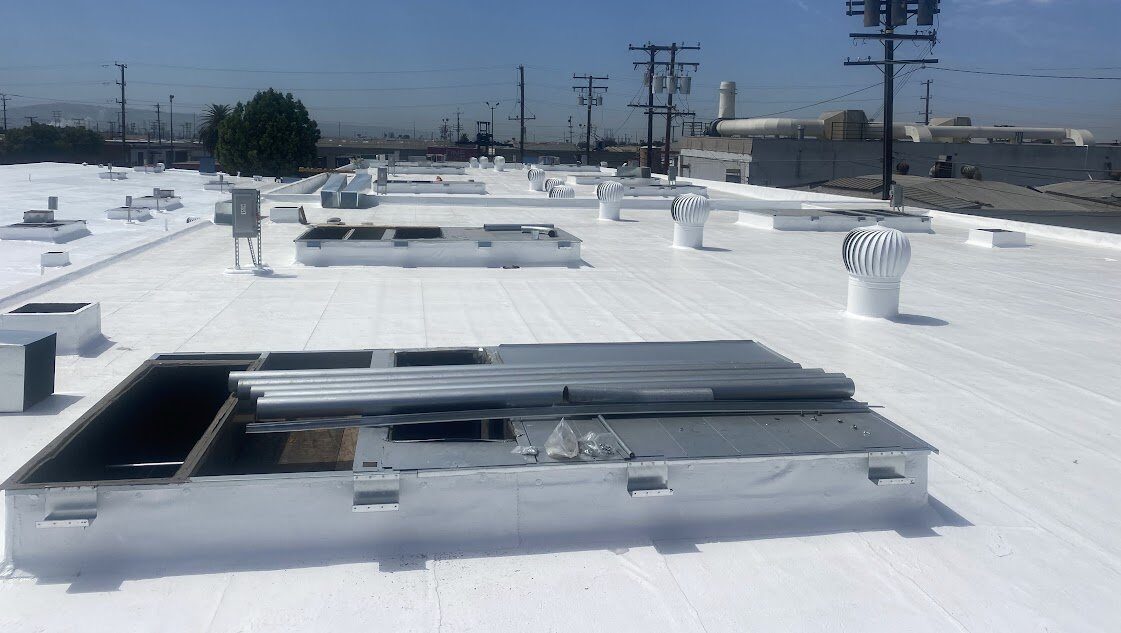
Commercial Roof Coating vs Replacement: Silicone Restoration Guide

A commercial roof coating restores an existing, structurally sound flat roof by applying a seamless, fluid-applied silicone or acrylic membrane over the entire surface, saving 50% to 70% compared to full roof replacement. Coating is ideal when the existing membrane has minor surface aging but the underlying insulation is 85%+ dry. Complete replacement is required when insulation is water-saturated or the structural deck is compromised.

By Mike & AndreRead Guide
Commercial Roof Drainage & Scuppers: Preventing Standing Water Damage
Commercial Roofing
7 min read

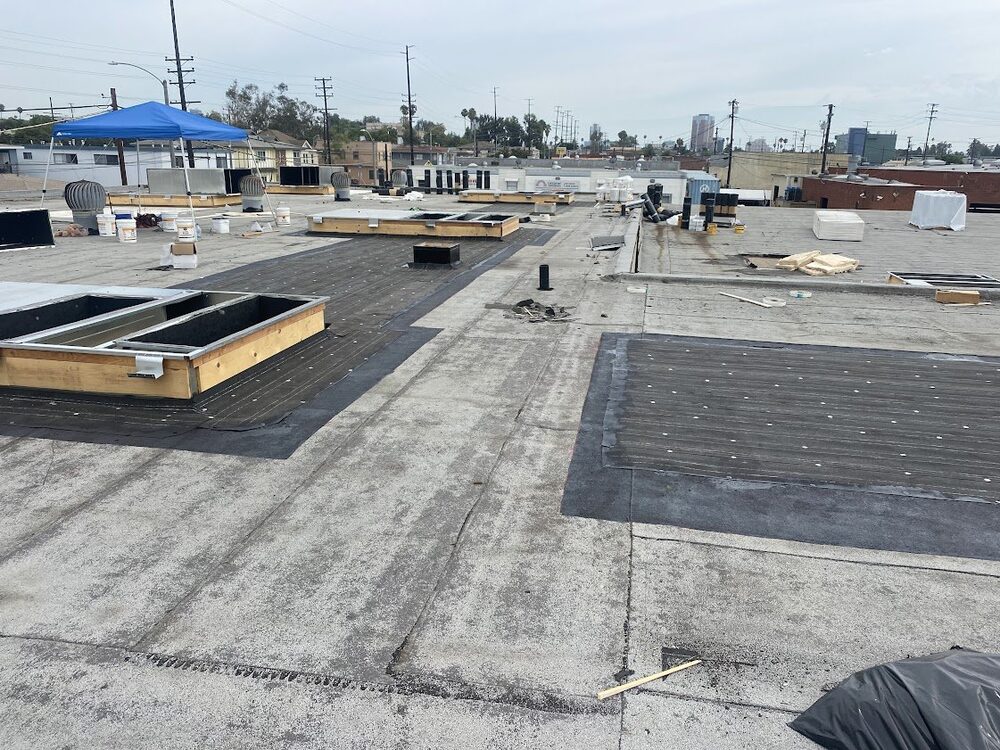
Commercial Roof Drainage & Scuppers: Preventing Standing Water Damage

Commercial roof drainage problems occur when primary internal drains, parapet scuppers, or downspouts become clogged, causing storm runoff to pond on low-slope membranes. Building codes require two independent drainage systems: a primary drain system and an emergency secondary overflow system (scuppers or secondary drains). If primary drains block during a torrential downpour, secondary scuppers prevent catastrophic roof collapse.

By Mike & AndreRead Guide
Roof Replacement Cost Breakdown: 2026 Material, Labor & Code Factors
Education & Pricing
9 min read

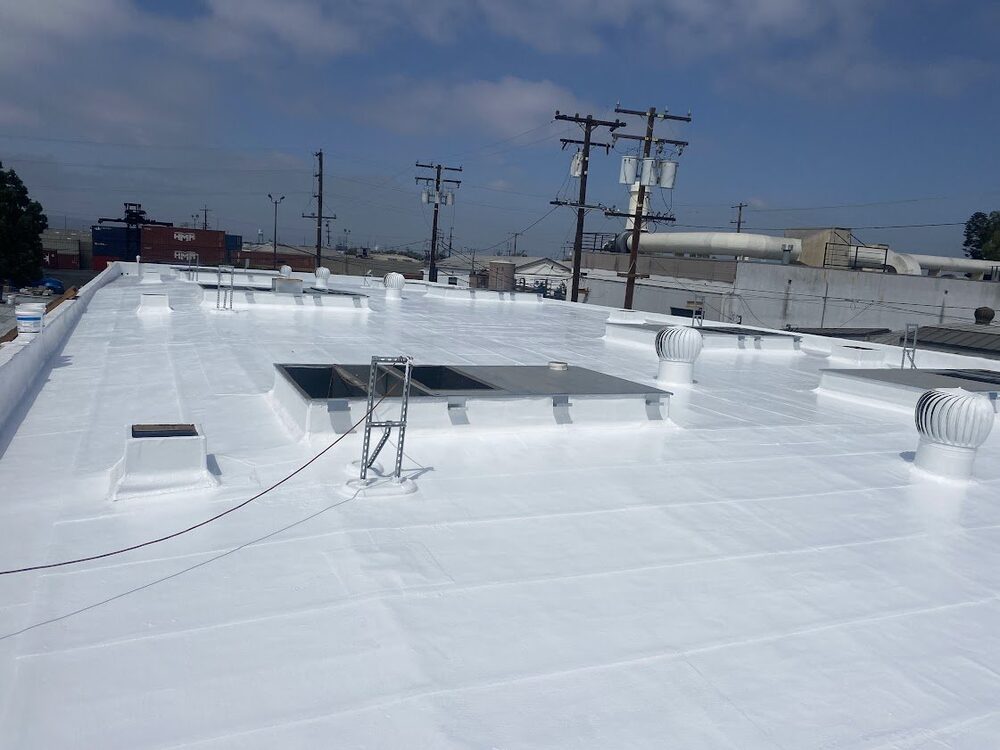
Roof Replacement Cost Breakdown: 2026 Material, Labor & Code Factors

In Southern California, residential roof replacement costs typically range from $4.25 to $6.50 per square foot for architectural shingles ($8,500 to $16,500 for a typical 2,000 sq ft home) and $9.00 to $15.00+ per sq ft for concrete or Spanish tile ($18,000 to $35,000+). Commercial TPO flat roofs average $5.50 to $9.50 per sq ft. Pricing depends on roof square footage, pitch steepness, tear-off layers, dry rot decking repair, and Title 24 cool roof requirements.

By Mike & AndreRead Guide
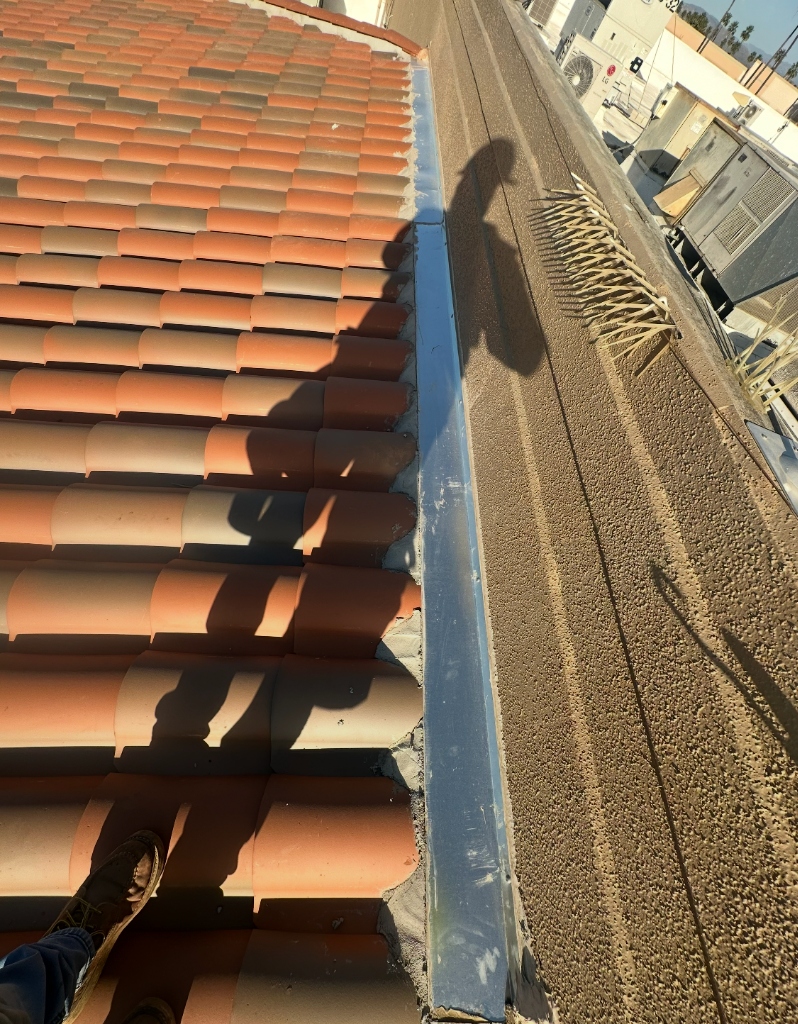
Real Estate Escrow Roof Certification: 2-Year CSLB Standards
Education & Pricing
7 min read

Real Estate Escrow Roof Certification: 2-Year CSLB Standards

A real estate escrow roof certification is an official written warranty issued by a licensed C-39 roofing contractor certifying that a home's roof has been inspected, repaired of all active leaks, and is guaranteed to remain watertight for a specified period (typically 2 years). Mortgage lenders, insurance underwriters, and home buyers frequently require roof certification before clearing loan contingencies.

By Mike & AndreRead Guide
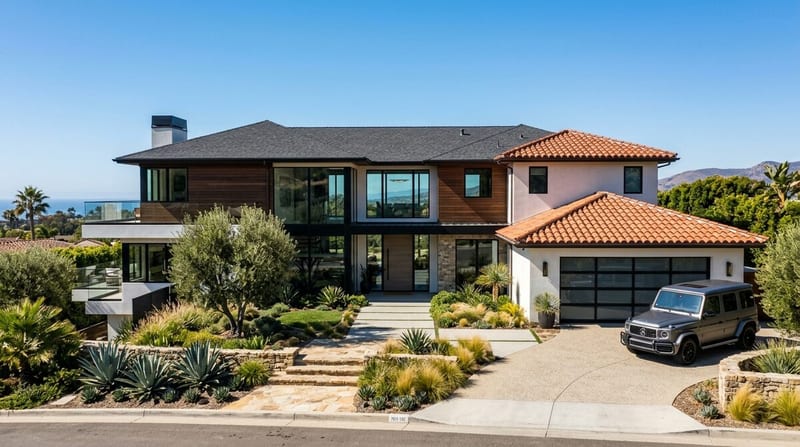
California Title 24 Cool Roof Requirements: Compliance Guide for 2026
Education & Pricing
8 min read

California Title 24 Cool Roof Requirements: Compliance Guide for 2026

California Title 24 Part 6 mandates that any residential or commercial roof replacement exceeding 50% of the roof surface (or 300+ sq ft) must meet strict Cool Roof standards in designated Climate Zones. In high-desert Climate Zone 14 (Lancaster/Palmdale) and Climate Zone 9 (Los Angeles/Gardena), steep-slope residential roofs require a minimum aged Solar Reflectance Index (SRI) of 16 to 20, while low-slope commercial roofs require an aged SRI of 75+.

By Mike & AndreRead Guide
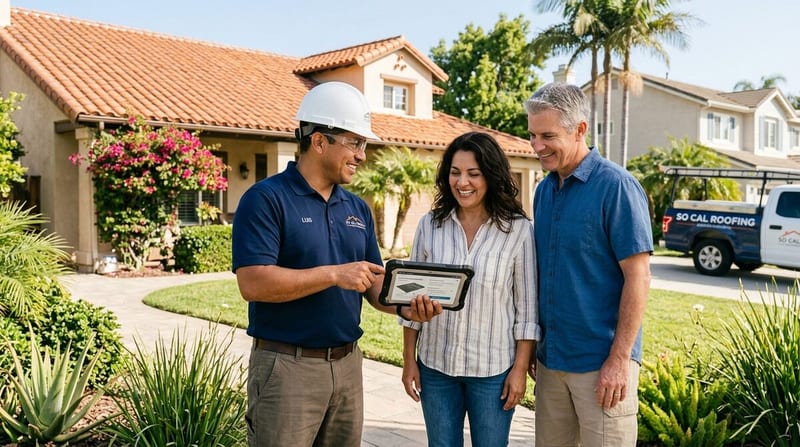
California Roofing Permits & CSLB C-39 Verification Guide
Education & Pricing
8 min read

California Roofing Permits & CSLB C-39 Verification Guide

In California, any roof replacement, re-roof, or structural repair exceeding 500 square feet requires a mandatory municipal building permit and CSLB licensed C-39 contractor. Pulling a permit ensures an independent city inspector verifies roof deck nailing, Title 24 energy compliance, and smoke/carbon monoxide detectors. Hiring an unlicensed contractor voids homeowner insurance coverage and leaves property owners personally liable for worker injuries.

By Mike & AndreRead Guide
How to Find the Source of a Roof Leak: Water Tracking & Diagnostics
Emergency Repair
7 min read

How to Find the Source of a Roof Leak: Water Tracking & Diagnostics

To find the source of a roof leak, start inside the attic with a high-lumen flashlight and measure uphill from the interior ceiling water stain. Water travels along the underside of roof sheathing and down rafter edges before dripping onto drywall. On the exterior roof surface, inspect penetrations (vent pipes, chimneys, skylights, and valleys) located 5 to 15 feet uphill and laterally from the interior stain.

By Mike & AndreRead Guide
What to Do After Desert Wind Damage: Homeowner Recovery Guide
Emergency Repair
6 min read

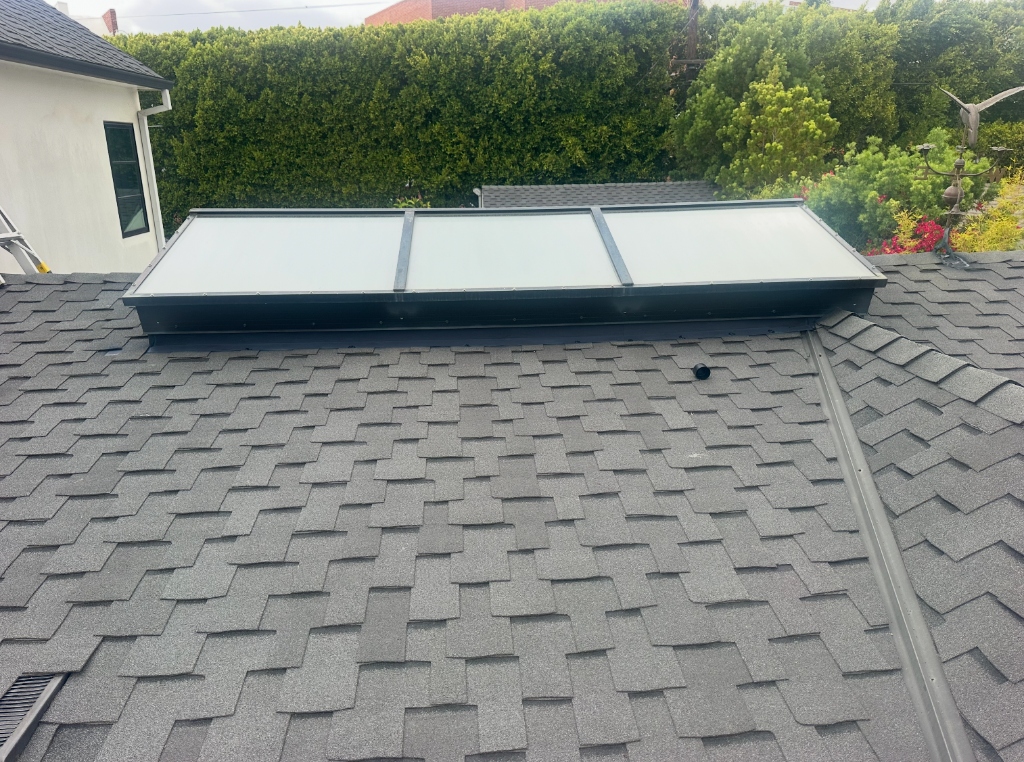
What to Do After Desert Wind Damage: Homeowner Recovery Guide

After a desert windstorm, immediately inspect the exterior perimeter of your home from ground level for fallen shingles, displaced ridge caps, or broken tiles. Take date-stamped photographs of all roof damage and yard debris. Check your attic and ceilings for active water intrusion or daylight, and contact a licensed C-39 roofing contractor to provide emergency weatherproofing before secondary rains arrive.

By Mike & AndreRead Guide
Roof Replacement Cost in Lancaster, CA: 2026 Price Guide
Education & Pricing
8 min read

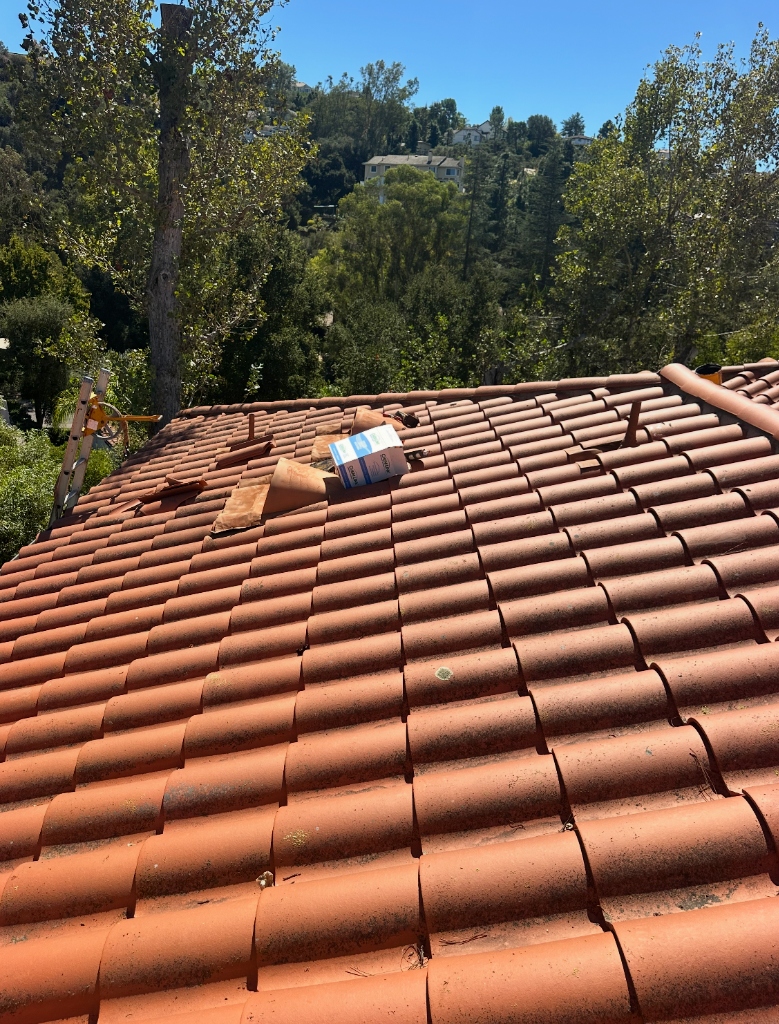
Roof Replacement Cost in Lancaster, CA: 2026 Price Guide

In Lancaster, CA, roof replacement costs typically range from $8,500 to $15,500 for architectural shingles on an average 1,800 to 2,200 sq ft home ($4.25 to $6.50 per square foot). Concrete and Spanish tile roof replacements range from $18,000 to $32,000+ ($9.00 to $15.00+ per sq ft). Reusing existing tiles with a Tile Lift and Reset averages $11,000 to $18,500, saving substantial material costs.

By Mike & AndreRead Guide
Asphalt Shingle Roofing in Palmdale, CA: Architectural High-Wind Systems
Residential Roofing
7 min read

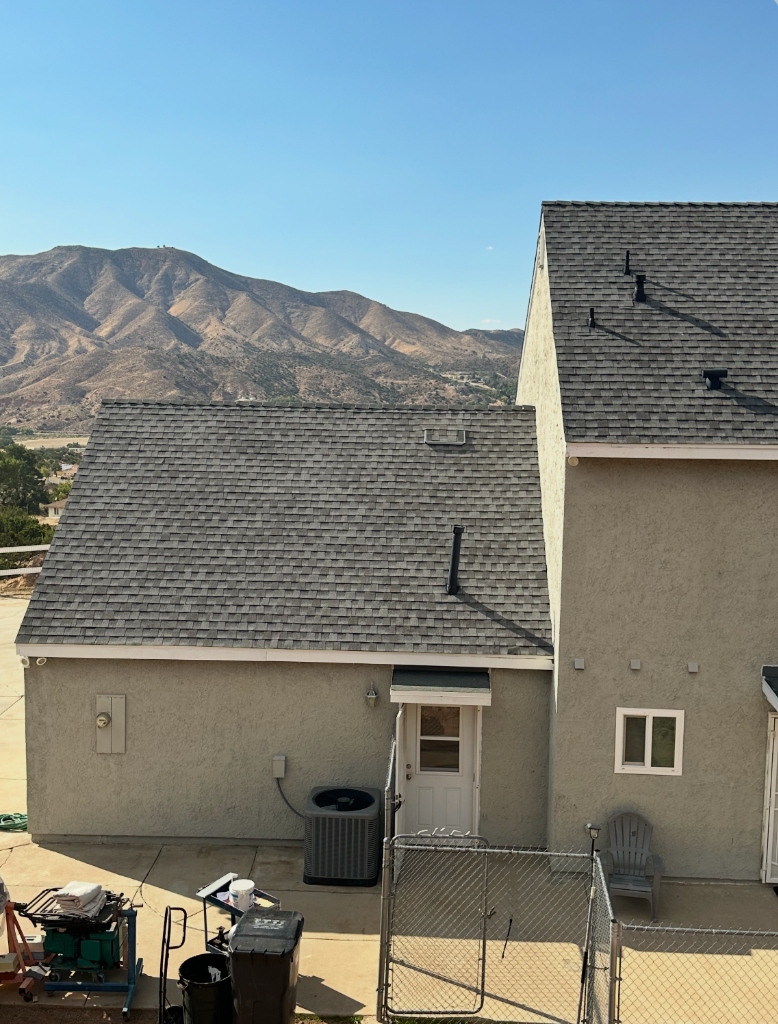
Asphalt Shingle Roofing in Palmdale, CA: Architectural High-Wind Systems

Asphalt shingle roofing in Palmdale requires architectural dimensional shingles engineered for high winds and extreme desert heat. Unlike old 3-tab shingles that blow off at 60 MPH, architectural shingles feature heavy fiberglass mats, dual-layer construction, and ASTM D7158 Class H ratings resisting 130 MPH gusts. Paired with Title 24 cool-roof granules, they deliver 20 to 25+ years of dependable desert protection.

By Mike & AndreRead Guide
Spanish Tile Roof Restoration: Preserving Historic Terracotta & Clay
Residential Roofing
8 min read

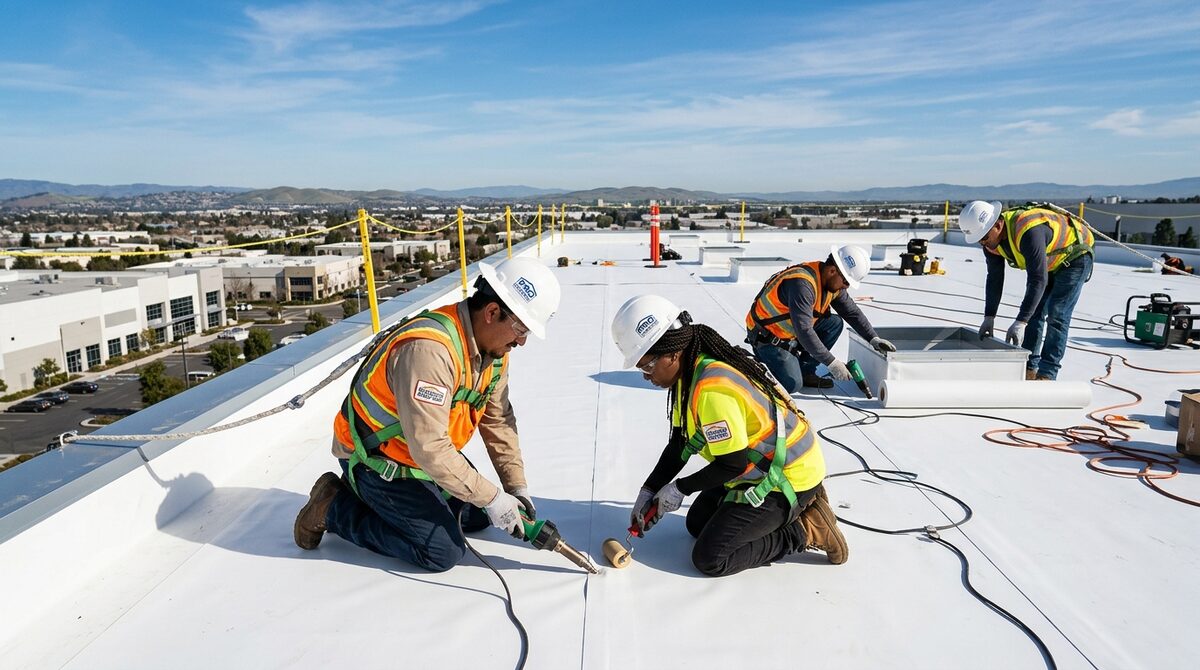
Spanish Tile Roof Restoration: Preserving Historic Terracotta & Clay

Spanish tile roof restoration preserves authentic clay terracotta or concrete mission tiles while completely replacing the deteriorated waterproofing underlayment underneath. Genuine clay tiles endure for 75 to 100+ years, but the asphalt underlayment beneath fails in 20 to 25 years. Restoration involves careful tile removal, installing modern SBS dual-ply underlayment, and re-setting tiles with historic mortar aesthetics.

By Mike & AndreRead Guide
Understanding Roof Ventilation in Desert Climates: Ridge Vents & Attic Fans
Residential Roofing
7 min read

Understanding Roof Ventilation in Desert Climates: Ridge Vents & Attic Fans

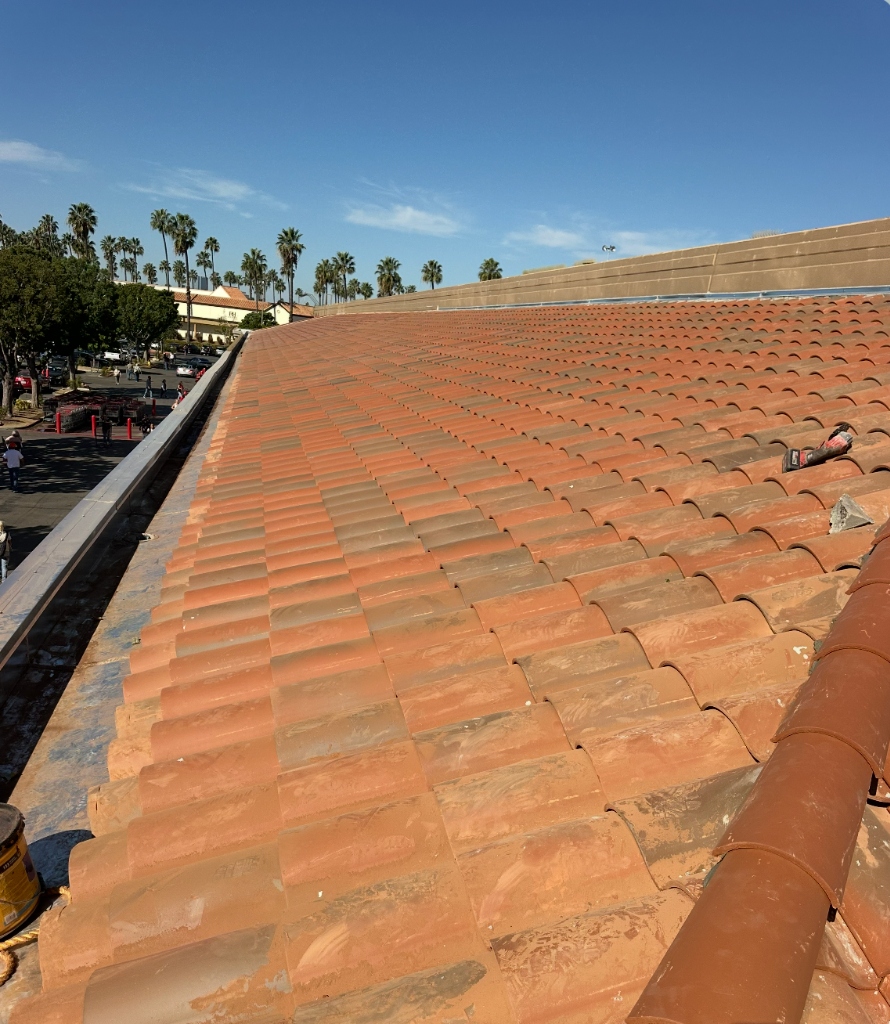
Proper roof ventilation in desert climates requires a balanced 50/50 system of continuous low intake vents (soffit or eave vents) and high exhaust vents (ridge vents or solar attic fans). In desert heat exceeding 100°F, unventilated attics reach 150°F to 165°F, cooking shingles from the underside, warping roof decking, and driving home air conditioning bills up by hundreds each month.

By Mike & AndreRead Guide
Signs Your Roof Needs Replacement: 7 Critical Warning Indicators
Residential Roofing
7 min read

Signs Your Roof Needs Replacement: 7 Critical Warning Indicators

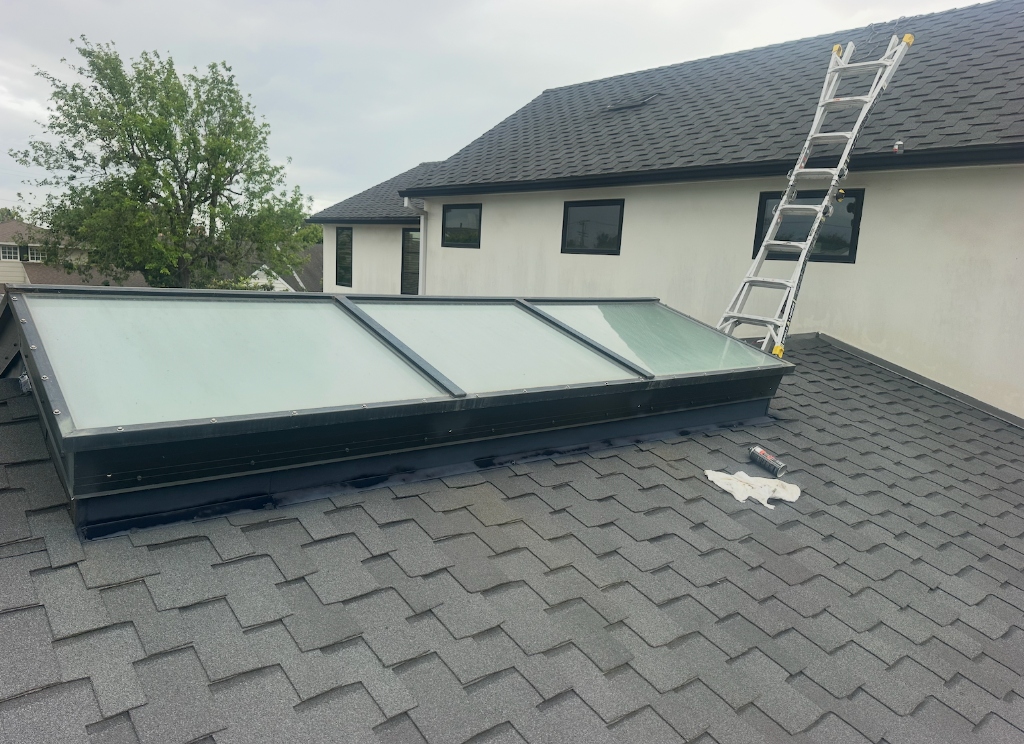
The 7 critical signs your roof needs replacement are: 1) Advanced age (over 20 years for shingles, 25 years for tile underlayment), 2) Shingles curling, cupping, or clawing, 3) Excessive granule loss filling gutters, 4) Widespread unbonded or missing shingles, 5) Daylight visible through attic roof boards, 6) Spongy, sagging roof decking, and 7) Recurring leaks across multiple distinct rooms.

By Mike & AndreRead Guide
Commercial TPO Roofing in Palmdale, CA: Industrial & Retail Solutions
Commercial Roofing
8 min read

Commercial TPO Roofing in Palmdale, CA: Industrial & Retail Solutions

Commercial TPO roofing in Palmdale protects industrial warehouses, retail plazas, and aerospace manufacturing facilities from intense high-desert heat and severe wind shear. APR Roofing installs heavy-duty 60-mil and 80-mil mechanically attached or fully adhered TPO systems with robotic hot-air welded seams, custom-fabricated edge metal, and Title 24 cool-roof certification.

By Mike & AndreRead Guide
Warehouse Roof Replacement Planning: Logistics, Budgets & Zero Disruption
Commercial Roofing
8 min read

Warehouse Roof Replacement Planning: Logistics, Budgets & Zero Disruption

Warehouse roof replacement planning requires detailed operational coordination to protect stored inventory, maintain loading dock access, and meet strict safety standards. Key planning phases include: 1) Infrared moisture survey to map wet insulation, 2) Structural load calculations for staging materials, 3) Sectional phasing to keep warehouse bays watertight daily, and 4) Selecting between 60-mil TPO single-ply or fluid-applied silicone restoration.

By Mike & AndreRead Guide
Flat Roofing for Apartment Buildings: Multi-Family Durability & Quiet Installs
Commercial Roofing
7 min read

Flat Roofing for Apartment Buildings: Multi-Family Durability & Quiet Installs

Flat roofing for apartment complexes and multi-family properties requires quiet, odor-free, highly durable systems that minimize tenant disruption while providing decades of leak-free performance. While hot-asphalt Built-Up roofs produce toxic fumes that trigger tenant complaints, modern white TPO single-ply membranes are installed with heat-welded seams and zero asphalt odors, lowering upper-floor cooling costs.

By Mike & AndreRead Guide
Commercial Roof Inspection Checklist: 24-Point Facility Manager Guide
Commercial Roofing
7 min read

Commercial Roof Inspection Checklist: 24-Point Facility Manager Guide

A commercial roof inspection checklist provides a systematic 24-point evaluation of a building's low-slope roofing assembly across five core categories: 1) Field membrane and welded seams, 2) Primary drains and overflow scuppers, 3) HVAC curb and pipe penetrations, 4) Parapet walls and coping cap terminations, and 5) Interior ceiling and structural deck condition. Semi-annual inspections catch micro-defects before they cause interior damage.

By Mike & AndreRead Guide
Roofing Problems Caused by Lancaster Winds: Desert Climate Solutions
Local Climate & Authority
7 min read

Roofing Problems Caused by Lancaster Winds: Desert Climate Solutions

Lancaster winds routinely gust between 45 and 65+ MPH, causing four major roofing failures: 1) Shingle tab unseating along windward rakes and eaves, 2) Complete blow-off of peak ridge cap shingles, 3) Tile chatter that cracks mortar beds and rattles underlayment, and 4) Wind-driven desert dust infiltrating unsealed overlaps, permanently preventing asphalt strips from re-bonding.

By Mike & AndreRead Guide
Roof Maintenance for Palmdale Homes: Seasonal Desert Protection Checklist
Local Climate & Authority
6 min read

Roof Maintenance for Palmdale Homes: Seasonal Desert Protection Checklist

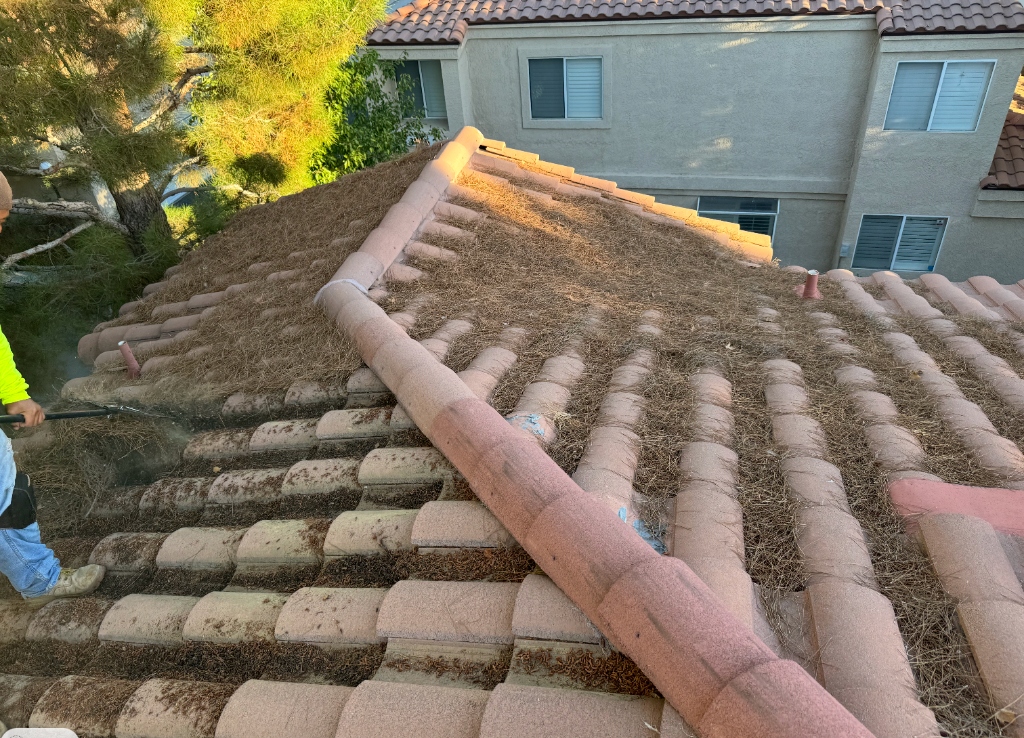
Roof maintenance for Palmdale homes requires proactive seasonal preparation to counteract high-desert climate swings (summer highs over 105°F and winter lows below 25°F). Essential maintenance includes: clearing desert dust and pine needles from valley metal, replacing cracked neoprene plumbing boots every 5 years, re-sealing chimney flashings, re-anchoring loose ridge caps, and checking attic ventilation.

By Mike & AndreRead Guide
Tile Roofing Considerations in Santa Clarita: Canyons, Wind & Fire Codes
Local Climate & Authority
7 min read

Tile Roofing Considerations in Santa Clarita: Canyons, Wind & Fire Codes

Tile roofing in Santa Clarita (Valencia, Saugus, Newhall, Castaic) must meet stringent Wildland-Urban Interface (WUI) Class A fire resistance and high-wind canyon codes. While heavy concrete and clay tiles provide non-combustible fire protection against blowing embers, canyon wind turbulence frequently dislodges unanchored tiles. Santa Clarita homeowners save 40-50% by executing a Tile Lift & Reset rather than purchasing new tile.

By Mike & AndreRead Guide
Cool Roofing Requirements in Gardena, CA: Title 24 Climate Zone 9 Guide
Local Climate & Authority
7 min read

Cool Roofing Requirements in Gardena, CA: Title 24 Climate Zone 9 Guide

In Gardena, CA (located in California Climate Zone 9), residential and commercial roof replacements exceeding 50% of the roof surface must meet Title 24 Part 6 Cool Roof standards. Steep-slope residential roofs require roofing materials certified by the Cool Roof Rating Council (CRRC) with an aged Solar Reflectance Index (SRI) of 16+, while commercial low-slope roofs require an aged SRI of 75+.

By Mike & AndreRead Guide
Roof Drainage Issues in South Bay Buildings: Marine Moisture & Ponding
Local Climate & Authority
7 min read

Roof Drainage Issues in South Bay Buildings: Marine Moisture & Ponding

Roof drainage issues in South Bay commercial and residential buildings (Gardena, Torrance, Carson) stem from low-slope ponding water and accelerated salt-air corrosion. Proximity to the Pacific Ocean introduces airborne ocean salts that corrode standard galvanized sheet metal flashings and gutters. When coastal fog and winter storms hit, clogged drains cause standing water that degrades roofing membranes.

By Mike & AndreRead Guide
Roof Maintenance for Monrovia Tile Homes: Foothill Canopies & Debris Dams
Local Climate & Authority
7 min read

Roof Maintenance for Monrovia Tile Homes: Foothill Canopies & Debris Dams

Roof maintenance for Monrovia and San Gabriel foothill tile homes focuses on clearing heavy tree canopy debris (oak leaves, pine needles, acorns) that forms water dams in tile valleys and behind chimneys. In foothill climates, trapped organic debris holds moisture against roof tiles, rotting wood battens, promoting moss growth, and causing winter storm leaks. Semi-annual valley clearing protects historic tile architecture.

By Mike & AndreRead Guide
Licensed Southern California Roofing Dispatch

Need a Roof Inspection or Urgent Leak Assessment?

Speak directly with an APR Roofing specialist. 100% in-house trained crews, CSLB #947534 licensed craftsmanship, and zero pressure estimates across the Antelope Valley, Santa Clarita, and South Bay.

Call APRText Photo