
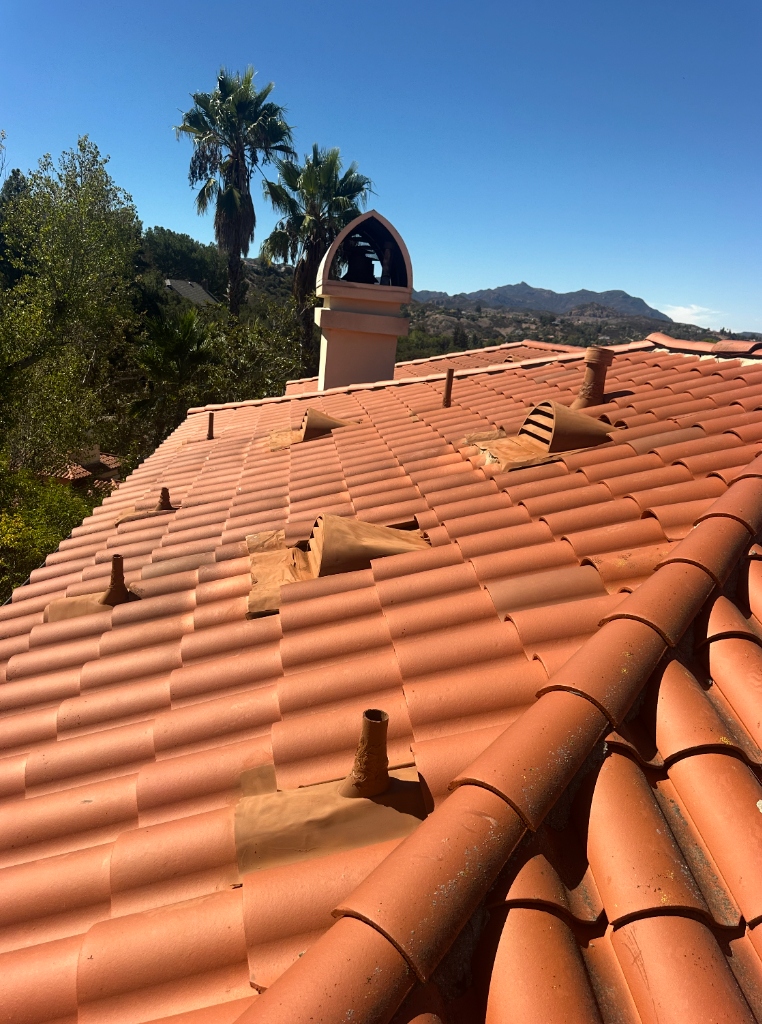
Water leaks around chimneys are almost always caused by failed step flashing, rusted base metal, cracked counterflashing sealant, or the absence of a roof cricket (saddle). Chimneys penetrate both the roof framing and the exterior weather barrier. Because masonry and wood frame expand and contract at different rates, rigid caulk seals crack over time, letting runoff channel straight into interior walls.
Key Technical Takeaways
- Chimney leaks rarely come from the chimney bricks themselves; 90% stem from flashing junctions with the roof.
- A chimney wider than 30 inches requires a sheet metal cricket (saddle) on its uphill side to divert water around the corners.
- Smearing mastic or roof tar around a chimney is a temporary fix that dries out, cracks, and conceals wood rot underneath.
- Proper chimney flashing requires a two-part system: step flashing attached to the roof deck, and counterflashing embedded into the masonry mortar joints.
The Anatomy of a Waterproof Chimney Flashing System
A proper chimney flashing assembly consists of four critical metal components: 1) Apron flashing along the bottom downhill face, 2) Step flashing along both sides, bent at 90-degree angles and layered between each shingle or tile course, 3) Counterflashing cut into masonry mortar joints (reglet) that overlaps the step flashing, and 4) A backer flashing or engineered cricket on the uphill face.
The Role of the Chimney Cricket (Roof Saddle)
When a chimney sits perpendicular to roof slope, its uphill backside acts as a dam, catching gallons of rushing rainwater. In California building code (CBC Chapter 15), chimneys exceeding 30 inches in width require a peaked sheet metal or framed cricket. The cricket splits the stream of water, diverting it smoothly around both sides of the chimney rather than letting it pool against the flashing.
Why Roofing Tar and Caulk Always Fail at Chimneys
When handymen or unqualified roofers see a chimney leak, their instinct is often to spread black asphalt mastic or silicone along the seam. Because chimneys and timber roof rafters flex differently under wind and thermal cycles, rigid caulking splits within 6 to 12 months. Water enters the micro-fractures, gets trapped against the wood framing, and rots out the chimney support headers.
Permanent C-39 Repair Protocol for Chimney Leaks
APR Roofing restores chimney leaks by removing surrounding shingles or tiles, inspecting and replacing dry-rotted roof decking, installing high-temperature rubberized underlayment, cutting fresh reglets into mortar joints, and installing custom-bent 26-gauge galvanized or pre-finished sheet metal flashing.
- Chimneys are located on high ridges and steep roof slopes; never climb near a chimney without anchored harness gear.
- Do not lean ladders against brick chimneys as older brickwork can be structurally unstable.
Repair vs. Replace Decision Matrix
- •The chimney structure is sound and damage is confined to rusted metal or cracked counterflashing sealant.
- •The surrounding roof has 10+ years of serviceable lifespan remaining.
- •Wood decking around the chimney header is firm and free of fungal decay.
- •Extensive dry rot has destabilized the structural framing rafters around the chimney.
- •The entire roof system is aged, brittle, and due for complete replacement.
- •The chimney masonry itself is disintegrating and requires structural brick rebuild.
Frequently Asked Questions
How much does chimney flashing repair typically cost?
Minor counterflashing re-sealing and step flashing repairs typically range from $650 to $1,850 depending on roof pitch, tile removal, and whether a new metal cricket must be fabricated.
Can chimney leaks damage my fireplace flue and damper?
Yes. Water seeping into the chimney chase causes rusting of the metal damper, disintegrates firebox mortar, and creates harmful mold inside fireplace walls.
Need Professional Assistance With Your Roof?
Our 100% in-house trained crews provide certified leak diagnostics, storm inspections, and permanent repairs across Lancaster, Palmdale, Santa Clarita, and Gardena.