Commercial roof drainage problems occur when primary internal drains, parapet scuppers, or downspouts become clogged, causing storm runoff to pond on low-slope membranes. Building codes require two independent drainage systems: a primary drain system and an emergency secondary overflow system (scuppers or secondary drains). If primary drains block during a torrential downpour, secondary scuppers prevent catastrophic roof collapse.
Key Technical Takeaways
- Standing water weighs 5.2 lbs per square foot per inch of depth; 4 inches of ponding adds over 20 lbs/sq ft of dangerous load.
- California Plumbing Code mandates independent secondary overflow drainage on all roofs with parapets.
- Overflow scuppers must be positioned 2 inches above the primary drain level to activate when primary drains clog.
- Conductor heads (collector boxes) prevent downspout vacuum lock and handle high-volume storm runoff.
The Two-Tiered Drainage Safety Code Requirement
California Building Code (CBC 1503.4) and Uniform Plumbing Code mandate that any commercial roof surrounded by parapet walls must feature two independent drainage paths: 1) Primary Drainage: Low-point internal drains or primary scuppers sized to handle historical 100-year storm rates, and 2) Secondary Emergency Drainage: Overflow scuppers cut through parapet walls or secondary piped drains installed 2 inches higher than primary drains. If tree leaves or trash clog the primary drain, the overflow scupper allows water to escape before it reaches structural weight limits.
Tapered Polyisocyanurate Insulation: Engineering Slope
Many commercial buildings have zero structural deck slope. To achieve the required 1/4-inch per foot drainage gradient, APR Roofing installs engineered tapered polyisocyanurate insulation systems. Pre-cut tapered panels create custom crickets and valleys between drains, directing water actively away from walls toward drainage outlets.
Scupper and Conductor Head Engineering
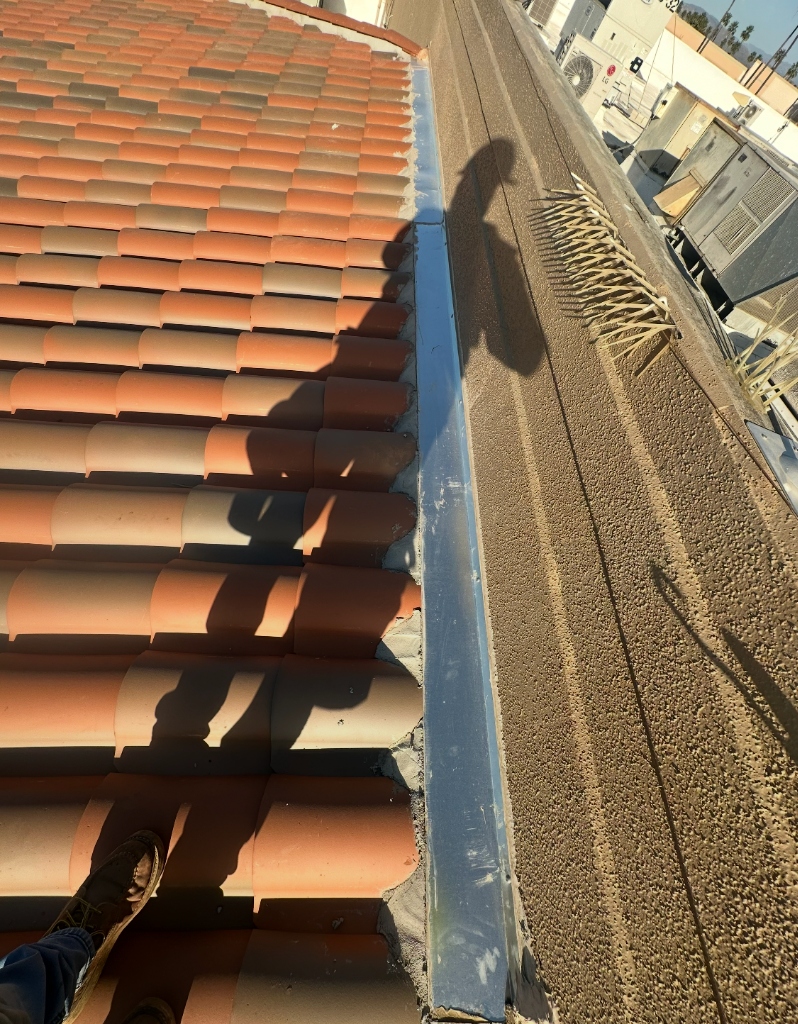
A parapet scupper is a metal-lined opening cut through the exterior wall. To prevent leaks, scuppers must feature fully soldered or heat-welded flanges integrated directly with the roof membrane. On the exterior face, water drains into a conductor head (collector box), which vents air and channels water down vertical leaders without overflowing.
- Never clear a heavily flooded commercial roof drain by plunging rapidly while standing in deep water; sudden suction can create powerful vortexes.
- Inspect roof parapet walls for structural cracking when heavy water accumulation has occurred.
Repair vs. Replace Decision Matrix
- •Drainage failure is caused by debris accumulation in drain strainers or conductor heads.
- •Scupper flashing has minor solder cracks that can be re-soldered and sealed with TPO target patches.
- •Roof slope is adequate and water clears within 24 to 48 hours of rainfall.
- •Severe deck sag has created permanent 3- to 6-inch deep birdbaths requiring structural re-sloping.
- •Cast iron drain bowls have cracked inside the building ceiling, leaking through the clamping ring.
- •The building lacks mandatory secondary overflow scuppers, creating severe code violation risks.
Frequently Asked Questions
What is the definition of ponding water on a commercial roof?
The National Roofing Contractors Association (NRCA) defines ponding water as any water that remains on a roof deck 48 hours or longer following precipitation in normal drying conditions.
How often should commercial roof drains be cleared?
We recommend inspecting and clearing commercial roof drains and scuppers quarterly, and immediately prior to the winter rainy season.
Need Professional Assistance With Your Roof?
Our 100% in-house trained crews provide certified leak diagnostics, storm inspections, and permanent repairs across Lancaster, Palmdale, Santa Clarita, and Gardena.