
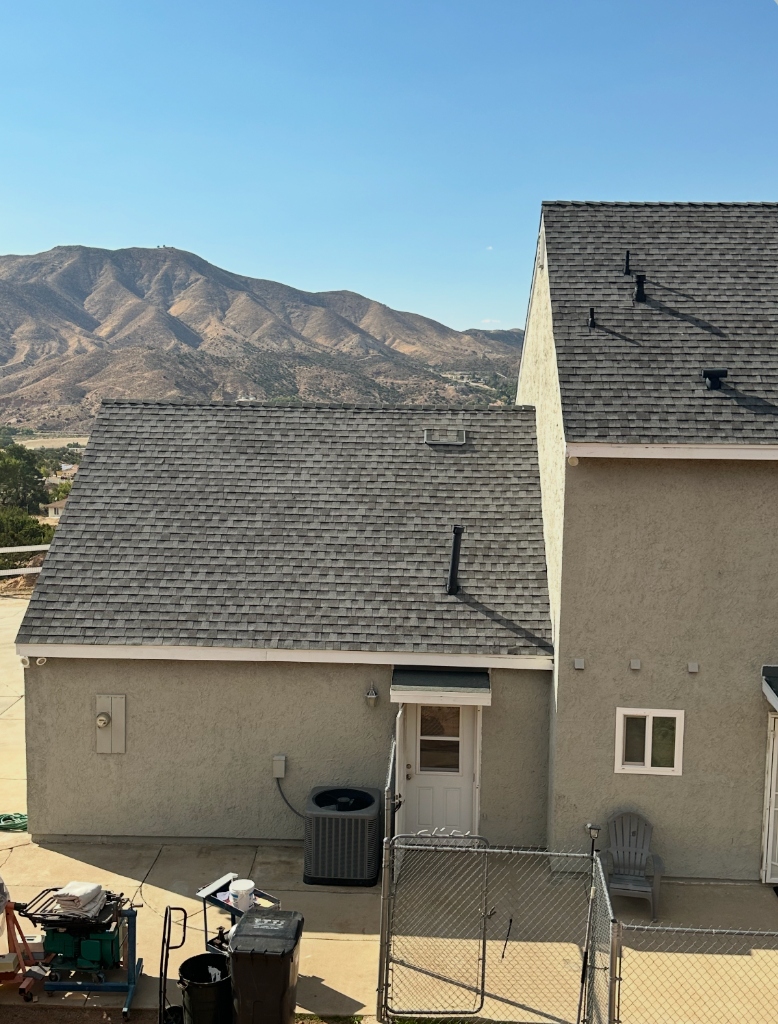
After a desert windstorm, immediately inspect the exterior perimeter of your home from ground level for fallen shingles, displaced ridge caps, or broken tiles. Take date-stamped photographs of all roof damage and yard debris. Check your attic and ceilings for active water intrusion or daylight, and contact a licensed C-39 roofing contractor to provide emergency weatherproofing before secondary rains arrive.
Key Technical Takeaways
- Document all fallen shingles and damaged roof facets with photos before cleaning your yard.
- Do not climb the roof while winds are gusting; high desert gusts can easily cause ladder falls.
- Contact your insurance company promptly to establish the storm loss date.
- Verify that repair contractors install Class H (130 MPH) wind-rated materials to prevent repeat damage.
Ground-Level Triage & Photo Documentation
Walk slowly around your home. Photograph any shingle tabs, metal flashing, or mortar chunks that blew into landscaping or driveways. Zoom in with your smartphone camera to photograph missing shingle sections or displaced ridge caps along the roofline. These images serve as definitive contemporaneous proof for homeowners insurance adjusters that damage was caused by a specific storm event.
Avoiding Out-of-State Storm Chasers
Following severe high-wind events in the Antelope Valley, unlicensed out-of-town contractors go door-to-door offering quick fixes. They frequently lack California C-39 licenses, carry no workers compensation insurance, perform substandard unpermitted work, and disappear when leaks reappear next winter. Always hire an established local contractor with physical office facilities and active CSLB credentials.
- Watch for nails sticking out of fallen shingle tabs in grass and driveways.
- Check overhead power service lines leading to your roof mast before placing ladders.
Repair vs. Replace Decision Matrix
- •Fewer than 15-20 shingles are missing and surrounding shingle seals are intact.
- •No water has entered interior ceilings.
- •Widespread unseating has broken sealant bonds across over 30% of the roof.
- •Existing shingles are brittle 3-tab models that cannot withstand standard desert wind.
Frequently Asked Questions
How fast do desert winds blow during Lancaster storms?
Sustained desert winds frequently reach 35 to 45 MPH, with localized microburst gusts exceeding 65 to 75 MPH through mountain passes.
Need Professional Assistance With Your Roof?
Our 100% in-house trained crews provide certified leak diagnostics, storm inspections, and permanent repairs across Lancaster, Palmdale, Santa Clarita, and Gardena.