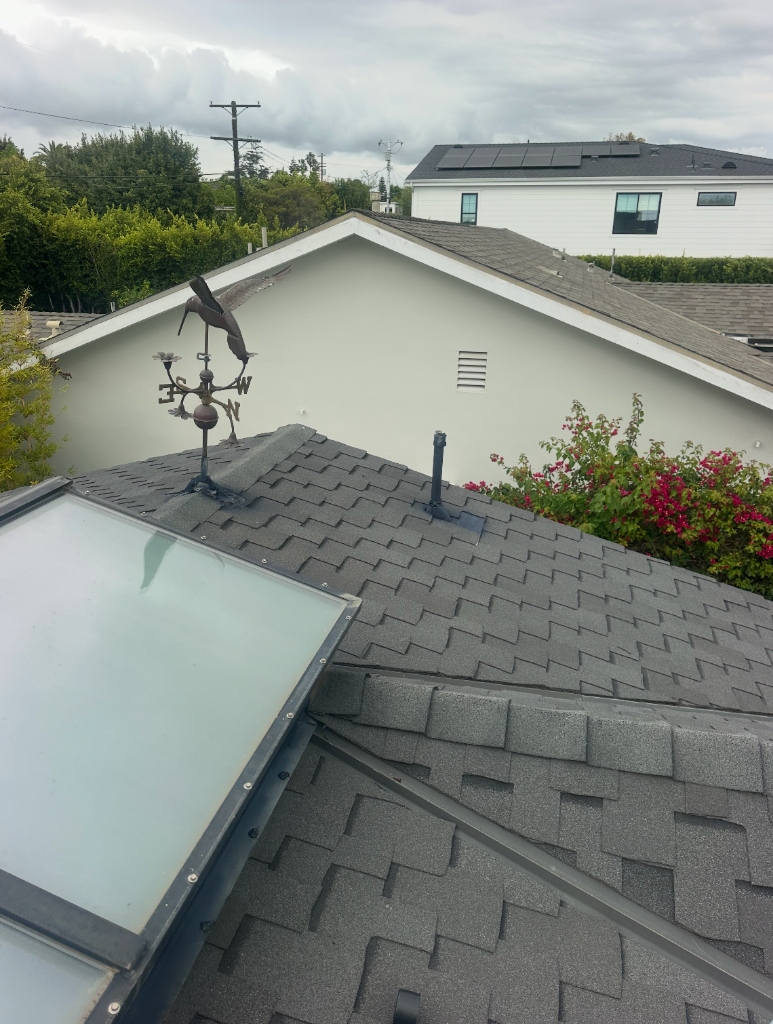
To recognize roof storm damage, look for missing shingle tabs, horizontal crease lines across shingle faces, dented soft-metal roof vents or gutters, bruised granules from hail or debris impact, cracked concrete tiles, and water marks inside your attic. High winds create localized low-pressure zones that lift shingle tabs, breaking the manufacturer asphalt seal without necessarily blowing shingles off the roof.
Key Technical Takeaways
- Inspect downspout discharge areas for excessive asphalt granules, which indicate heavy shingle abrasion.
- Check metal gutters, chimney caps, and air vents for indentations; soft metals show storm impact before shingles.
- Shingles lifted by wind often collect dust along their sealant strips, preventing them from ever re-adhering.
- Schedule a professional attic inspection to identify leaks before water stains penetrate finished ceiling drywall.
Ground-Level Exterior Storm Checklist
Homeowners can safely identify initial storm warning signs from ground level using binoculars. Look for: displaced shingles or pieces of shingle tabs on the lawn; displaced ridge cap shingles along roof peaks; dented gutter troughs and downspouts; cracked or misaligned Spanish barrel tiles; bent valley metal; and displaced spark arrestor caps on chimneys.
The Threat of Unseated Shingles (Hidden Wind Damage)
The most insidious roof storm damage is unseated shingles. When desert wind gusts exceed 45 MPH, shingles flex upward and snap their seal strips. Once the wind dies down, the shingle settles back flat, appearing undamaged from the ground. However, because the factory seal is broken, driving rain penetrates easily. APR Roofing inspectors physically test shingle bonding during on-roof inspections.
Attic Inspection Protocol for Structural Leaks
Take a powerful flashlight into your attic after any major storm event. Look for: damp or discolored plywood sheathing, rusted nail tips poking through the decking, wet insulation batts, and musty odors. Stains that appear around vent pipes or along rafter edges require prompt flashing inspection.
- Do not climb onto a storm-damaged roof; broken tiles and loose shingles can slide out from underfoot.
- Stay away from downed power lines or power lines entangled in tree branches contacting your roof.
Repair vs. Replace Decision Matrix
- •Storm damage is confined to a handful of lifted shingles or isolated vent cap dents.
- •Plywood decking beneath the storm area is dry and structurally intact.
- •The roof is relatively new (under 12 years) and materials match easily.
- •Widespread wind unseating has compromised more than 30% of the entire roof surface.
- •Pervasive hail or flying debris impacts have fractured the fiberglass matting of shingles throughout.
- •Structural rafter damage or significant wood rot has compromised roof integrity.
Frequently Asked Questions
How long do I have to file a roof storm damage insurance claim in California?
Most California homeowners insurance policies require damage to be reported within one year of the storm date. Filing promptly after professional C-39 documentation prevents disputes over pre-existing wear.
Does APR Roofing assist with storm damage insurance claims?
Yes. We provide complete forensic inspection reports, photographic evidence, itemized repair scopes, and meet insurance adjusters on-site to ensure all storm damage is accurately represented.
Need Professional Assistance With Your Roof?
Our 100% in-house trained crews provide certified leak diagnostics, storm inspections, and permanent repairs across Lancaster, Palmdale, Santa Clarita, and Gardena.